That Little Rule Printed on the Felt Is Costing You More Than You Know
Walk into any casino floor in Vegas, Atlantic City, or your favorite online card room, and you'll notice a small block of text printed right on the felt. Most players glance at it once and forget it. That's a mistake — because one of those lines, specifically whether the dealer hits or stands on soft 17, can quietly drain your bankroll at a rate you'd never expect.
We're talking about a swing of nearly 0.2% in house edge. That might sound trivial. But stretch it across a few hundred hands in a single session, and you're looking at a meaningful chunk of change leaving your stack for no reason other than not knowing the rule existed.
Let's fix that.
What Even Is a Soft 17?
Quick refresher before we get into the strategy stuff. A "soft" hand in blackjack is any hand that contains an Ace counted as 11 without busting. So a soft 17 is specifically an Ace plus a 6. The hand is called "soft" because the Ace can flip to a value of 1 if the next card would push the total over 21, giving the dealer a safety net that a hard 17 doesn't have.
That flexibility is exactly why it matters. A dealer sitting on a hard 17 — say, a 10 and a 7 — is locked in. Basic rules say stand. But a soft 17 is a different animal. The dealer can take another card with relatively low risk of busting, and if they catch a 4, 3, or 2, they end up with a stronger hand than 17. That's the edge the house is quietly extracting.
H17 vs. S17: The Two Worlds You're Playing In
Every blackjack table in the US operates under one of two dealer rules for soft 17:
- H17 (Hits Soft 17): The dealer must take another card on a soft 17. This is the more common rule you'll find at most American casinos today, and it favors the house by roughly 0.2% compared to S17 games.
- S17 (Stands on Soft 17): The dealer must stand on all 17s, hard or soft. This is the better rule for players and tends to show up in higher-limit games or more player-friendly venues.
That 0.2% gap doesn't sound dramatic, but consider this: at a $25 minimum table playing around 60 hands per hour, that difference translates to real dollars over an evening. And most players are sitting in H17 games without ever knowing they stepped into slightly worse odds.
How to Spot the Rule Before You Buy In
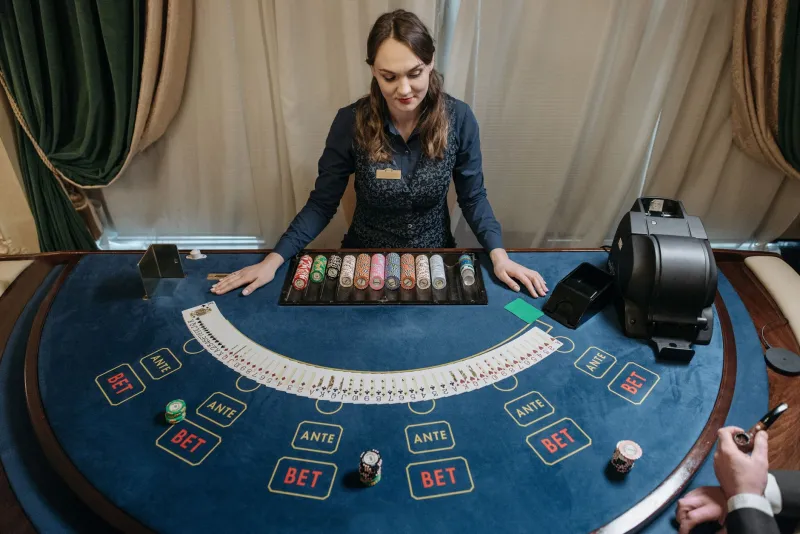
This is the easy part. Casinos are legally required to post the dealer rules on the table felt. Look for text that reads either "Dealer Hits Soft 17" or "Dealer Stands on All 17s." It's usually printed near the betting circle area or along the edge of the felt closest to the dealer.
If you're playing online — whether it's a live dealer room or an RNG table — the rule will be listed in the game info or paytable section. Click it before you sit down. Takes five seconds and tells you exactly what you're walking into.
When you're scouting a physical casino floor, prioritize S17 tables when you can find them. They exist, especially in six-deck shoe games at higher-end properties. If your only option is H17, no need to walk away — just adjust your strategy accordingly, which is exactly what we're about to cover.
The Strategy Adjustments That Actually Matter
Here's where most casual players leave money on the table. Standard basic strategy charts are typically built around S17 rules. If you're using one of those charts at an H17 table and not making any adjustments, you're playing slightly suboptimal blackjack. The changes aren't massive, but they're meaningful.
These are the key moves to shift when you're up against a dealer who hits soft 17:
Double down on 11 vs. Dealer's Ace: In an S17 game, basic strategy says hit this spot. In an H17 game, the math flips — you should double. The dealer's Ace is slightly weaker in this context because their soft 17 is no longer a guaranteed stand, and your double gains value.
Double down on soft 18 (Ace-7) vs. Dealer's 2: In S17, hitting is the standard play. Under H17 rules, doubling here becomes the better mathematical choice.
Double down on soft 19 (Ace-8) vs. Dealer's 6: This one surprises a lot of players. In an H17 game, the dealer's 6 becomes a slightly more dangerous card for them — the extra hitting requirement on soft 17 increases their bust rate just enough that doubling your Ace-8 against a 6 becomes the correct move.
Surrender 15 vs. Dealer's Ace: If the table offers late surrender (and you should always look for this option), surrendering 15 against a dealer Ace is the right call in H17 games. In S17, it's closer to a borderline play.
None of these adjustments are complicated once you know they exist. The problem is that most players never learn them because they don't realize the rule even affects their strategy.
Why This Stuff Gets Overlooked
American casino culture doesn't exactly encourage players to slow down and read the fine print. The floor is loud, the drinks are flowing, and the whole environment is engineered to keep you moving fast. Casinos bank on the fact that most players will sit down, toss their chips in, and play on instinct.
That's not a knock on anyone — it's just how the game is set up. The house edge in blackjack is already one of the lowest in the casino, which is a big reason people love it. But squeezing every tenth of a percent back from the house is exactly the kind of discipline that separates players who come out ahead over time from those who wonder where their bankroll went.
The soft 17 rule is a perfect example of a variable that feels invisible until you know to look for it. Once you do, it becomes just another piece of information — something you check automatically before buying in, the same way you'd check the number of decks or whether the table pays 3:2 on blackjack.
The Bottom Line
You don't need to be a card counter or a professional player to use this information. You just need to spend thirty seconds reading the felt before you sit down, know which version of the rule you're dealing with, and have two or three strategy tweaks ready to go when you're in an H17 game.
That's it. No complicated systems. No memorizing charts from scratch. Just a small shift in awareness that keeps more of your money where it belongs — in your stack.
At 21 Blackjack, we're big believers that the best edge you can have at any table is simply knowing the game better than the average player sitting next to you. The soft 17 rule is one of the clearest examples of that principle in action. Now you know it. Use it.