One Benjamin, One Deck, One Session: What Basic Strategy Really Does With $100 on the Vegas Floor
Everybody's heard the pitch: learn basic strategy, cut the house edge down to half a percent, and suddenly you're basically even money against the casino. Sounds clean. Sounds almost too clean. So we decided to put it to a real-world test — not a simulation, not a spreadsheet, but an actual session at a real American casino with a $100 starting bankroll and a hard rule: no gut calls, no streaks, no hunches. Basic strategy only, every single hand.
What followed was equal parts educational, frustrating, and genuinely surprising.
Setting the Stage: Table Selection Matters Before You Even Sit Down
Before a single chip hits the felt, the prep work starts. Not all $10 minimum tables are created equal, and this is where a lot of players throw money away before they've even been dealt a card.
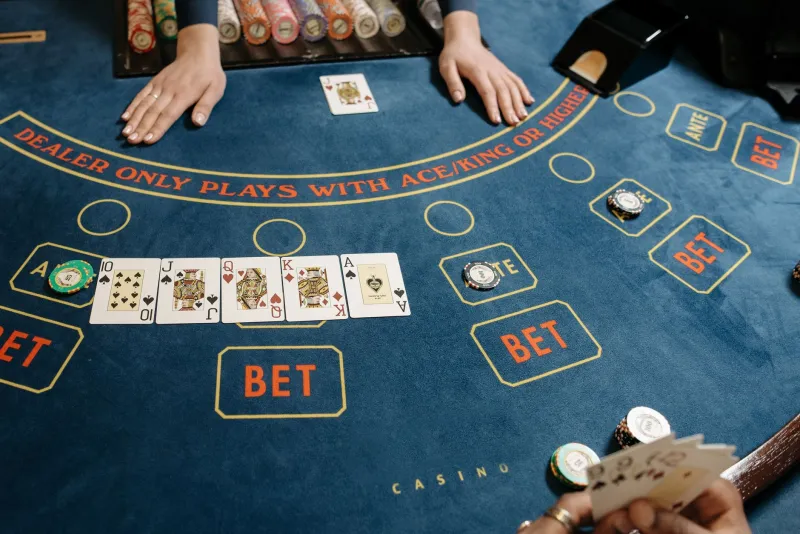
The target here was a 3:2 blackjack payout table — non-negotiable. A 6:5 payout table, which you'll find plastered all over the casino floor these days, quietly bumps the house edge up by nearly 1.4%. On a $10 bet, a natural blackjack pays $15 at 3:2 but only $12 at 6:5. That $3 difference compounds fast over a session. Walk past those tables without a second glance.
Also scouted for: dealer stands on soft 17 (better for the player), ability to double down on any two cards, and the option to split pairs up to three times. Found a six-deck shoe game that checked most of those boxes at a $10 minimum. Bought in for $100. Ten chips. Let's go.
The First Fifteen Hands: Variance Is Real and It Hits Immediately
Basic strategy doesn't promise a winning start. It promises a mathematically sound one. Those are very different things, and the first fifteen hands made that clear fast.
Hand 3: Dealt a 16 against a dealer's 10. Basic strategy says hit. Gut feeling screams stand. Basic strategy wins the argument — you hit. You bust. Down $10. It stings, but standing on 16 against a 10 is statistically worse over thousands of hands. That's the whole point.
By hand 12, the bankroll had dipped to $70. Down 30% in under twenty minutes. This is where most recreational players abandon the strategy and start improvising. That improvisation is exactly how the casino makes its money.
Hand 14 brought a pair of 8s against a dealer's 6. Split them — basic strategy 101. Both hands developed into 18s. Dealer busted. Back to $90. The comeback felt earned in a way that a lucky hunch never does.
The Middle Stretch: Where Discipline Gets Tested
Hands 16 through 35 were the psychological meat of the session. Variance kept swinging, but the decisions stayed locked in. Doubled down on 11 against a dealer's 9 — basic strategy says go, regardless of how uncomfortable it feels to put $20 on the table when you're still down from earlier. Hit a 20. Collected.
A few hands later: soft 18 against a dealer's 9. Basic strategy says hit, not stand. This one trips up even experienced players because 18 feels like a strong hand. It's not strong enough against a 9. Hit, landed a 2, stood on 20. Dealer showed 19. Won.
By hand 35, the bankroll sat at $115. Up $15 from the start. Not glamorous. Not a Hollywood moment. But solidly positive, and built entirely on correct decisions rather than luck chasing.
The Back Half: When the Shoe Turns Cold
The next stretch was humbling. Variance — the part of blackjack that basic strategy cannot eliminate — came back around. Four straight losing hands on correct plays. A doubled 10 that bricked. A split pair of aces that both drew low cards against a dealer's eventual 21.
By hand 50, the stack was at $85. Down from the high point but still within range of the starting buy-in. The critical thing here: not a single deviation from the strategy chart. Every decision was the mathematically correct one, even when it didn't feel like it.
This is where the honest conversation about basic strategy has to happen. It is not a guarantee. It is a framework that reduces the house edge to roughly 0.5% under good conditions — meaning over a long enough timeline, you lose less than almost any other approach. But a 50-hand session isn't a long timeline. Short sessions are dominated by variance, not strategy.
Final Count and What It Actually Means
Session ended at hand 60. Final bankroll: $92. A net loss of $8 over roughly 90 minutes of play.
Here's the honest math: at a 0.5% house edge on $10 average bets over 60 hands, the expected loss is around $3. The actual loss was $8. That's variance doing its thing — and it's completely normal. On another day, the same strategy and the same decisions could just as easily have landed at $115 or higher.
What the session proved wasn't that basic strategy makes you a winner every time. It proved something more valuable: that disciplined, chart-correct play keeps you in the game longer, makes every dollar work harder, and removes the emotional decision-making that quietly bleeds bankrolls dry.
What $100 Taught Us That No Simulation Can
The real lesson from this challenge isn't in the final number. It's in the process. Basic strategy forces you to make the right call when everything in your gut is screaming the wrong one. It keeps your losses from compounding through bad decisions on top of bad luck.
For American players heading to a casino floor with a modest bankroll, that discipline is genuinely the most valuable thing you can bring to the table. Not a system. Not a lucky charm. Not a hunch about streaks.
A $100 session with strict basic strategy isn't going to retire you. But it's going to give you the best honest shot the game allows — and that's more than most players ever actually give themselves.