That One Card the Dealer Shows You Is Worth More Than You Think
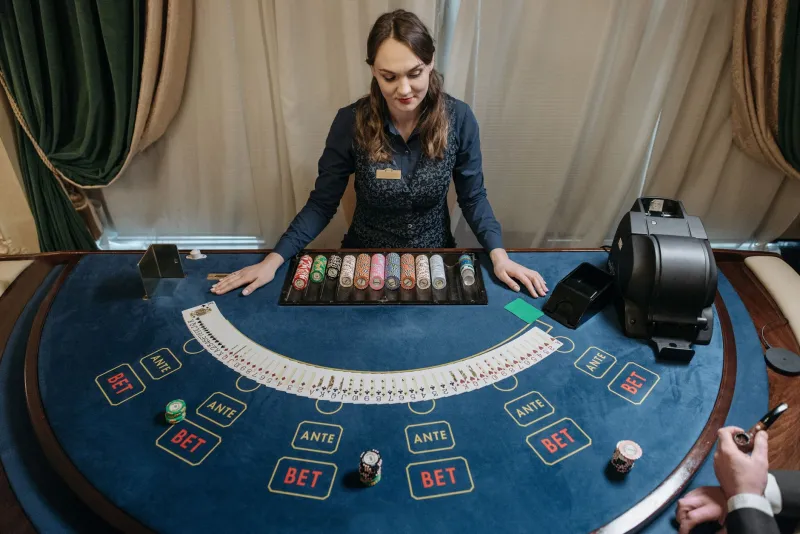
Every hand of blackjack starts the same way. Cards come out, chips are on the felt, and somewhere in the middle of the table sits the dealer's upcard — one face-up card just hanging there, waiting to be read. Most recreational players glance at it, shrug, and go straight to their own hand. That's a mistake, and it's one that quietly chips away at bankrolls across every casino floor in America.
That upcard is not decoration. It's data. And once you start treating it that way, the entire game starts making more sense.
Why the Upcard Matters More Than Your Own Hand
Blackjack strategy isn't built around your cards alone — it's built around the relationship between your hand and the dealer's visible card. Basic strategy charts, the ones that have been mathematically refined over decades, don't give you a single answer for "I have 16." They give you a different answer depending on whether the dealer is showing a 2 or a 10. That distinction is everything.
Here's the core idea: the dealer is forced to play by fixed rules. They have to hit until they reach 17 or higher. They can't make judgment calls. They can't bluff. That rigidity is actually your leverage — but only if you know how to exploit it based on what's showing.
The Cards That Work in Your Favor
Let's start with the good news. When the dealer shows a 4, 5, or 6, you're sitting in a favorable position. These are the cards that give the dealer the highest probability of busting before they ever get close to beating you.
A dealer showing a 5 or 6 will bust roughly 40 to 42 percent of the time. That's nearly a coin flip on whether they even make a hand. A 4 upcard puts them in bust territory around 40 percent of the time as well. The 2 and 3 are slightly less dangerous for the dealer but still lean in your direction — bust rates around 35 percent.
What does this mean for you practically? It means you should be more conservative with these dealer upcards. Don't take unnecessary risks trying to build a stronger hand when there's a real chance the dealer is going to blow up on their own. If you're sitting on a 12 or 13 against a dealer's 6, basic strategy says stand. Not because 13 is a great hand — it's not — but because the dealer's likely outcome makes it the smarter play. You're not trying to win with your hand; you're letting the dealer lose with theirs.
This is also when doubling down becomes a weapon. Doubling on an 11 against a dealer's 5 or 6 is one of the highest-value moves in the game because you're piling more money on the table at the exact moment the dealer is most vulnerable.
The Cards That Should Put You on Alert
Flip the script when the dealer shows a 7, 8, 9, 10, face card, or Ace. Now you're in danger territory.
A dealer showing a 10-value card — and that includes Jacks, Queens, and Kings — is assumed to have a 10 in the hole by many strategy frameworks, giving them a starting total of 20. They won't always have it, but the probability is high enough that you need to play accordingly. The bust rate for a dealer showing a 10 drops to around 23 percent. That's not nothing, but it means the dealer is going to make a hand the majority of the time.
An Ace upcard is the scariest of all. The dealer immediately checks for blackjack, and if they don't have it, they're still starting from a position of enormous flexibility. Dealer bust rates with an Ace upcard hover around 17 percent — the lowest of any card.
Against these strong upcards, the right play often feels counterintuitive. Hitting a 16 against a dealer's 10 is uncomfortable, but it's correct. Standing there hoping the dealer busts is statistically wishful thinking. You have to take a card and try to improve your total because the dealer is likely going to get there regardless.
Splitting and Doubling Through the Upcard Lens
The upcard doesn't just affect your hit-or-stand decisions. It reshapes your entire approach to splitting pairs and doubling down.
Take 8s. Basic strategy says always split 8s, and that's true — but the reasoning changes depending on what's showing. Against a weak dealer card, splitting 8s gives you two chances to build a hand while the dealer is vulnerable. Against a dealer's 10 or Ace, you're splitting 8s because 16 is a terrible hand and two separate 8s give you a fighting chance to improve at least one of them. Same move, different reasoning.
Nines are more nuanced. Split 9s against a dealer's 2 through 6 and again against 8 or 9. But stand on 9s against a 7, 10, or Ace. Why? Because 18 beats the dealer's likely total when they're showing a 7, and against a 10 or Ace, the risk of splitting isn't worth it.
Doubling down follows similar logic. You want to double when the dealer is in a weak position and your hand has strong upside. Doubling an 11 against a dealer's 6 is aggressive in the best way possible. Doubling that same 11 against a dealer's Ace? Basic strategy says hit instead, because the risk-reward just doesn't hold up.
Turning Information Into Habit
The challenge for most American recreational players isn't understanding this stuff — it's applying it consistently in the moment. There's a lot going on at a casino table. There's conversation, cocktails, other players making decisions, and the general sensory overload that Vegas and Atlantic City are specifically designed to create.
Building the upcard read into your automatic routine takes practice. Before you even look at your own cards, train yourself to register the dealer's upcard first. Ask yourself one simple question: is this dealer in a weak spot or a strong one? That single mental checkpoint will anchor every decision that follows.
Online blackjack is actually a great place to build this habit. With no time pressure and no social dynamics to navigate, you can slow down, reference a strategy chart, and really internalize the logic behind each move. By the time you're back at a live table, the upcard read becomes second nature.
The Bottom Line
The dealer's upcard is the most underused piece of information in recreational blackjack. It's sitting right there in the open, telling you something important about how this hand is likely to play out — and most players walk right past it. The ones who don't are the ones making smarter bets, splitting at the right moments, and doubling down when the math is actually on their side.
You don't need to be a card counter to use this. You don't need a math degree. You just need to look at that card before you do anything else and let it do the work it was always meant to do.