Your Table Isn't Running Hot — Your Brain Just Wants It To Be
The Feeling Is Real. The Pattern Isn't.
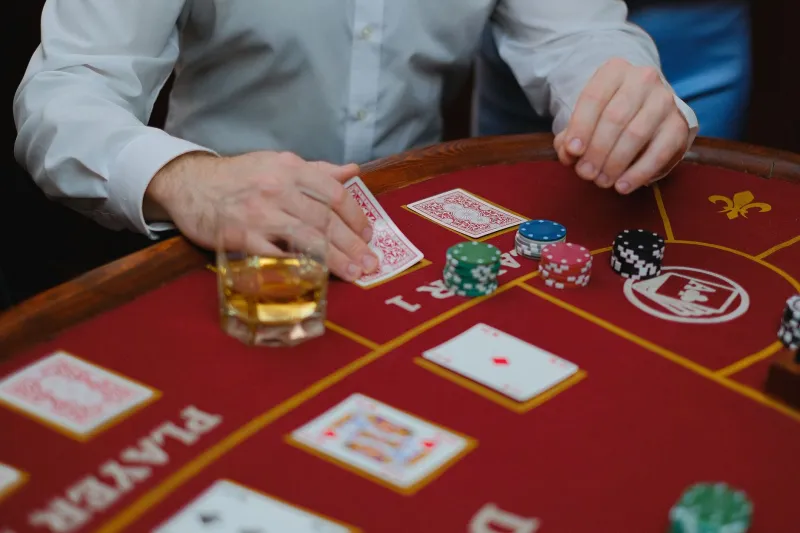
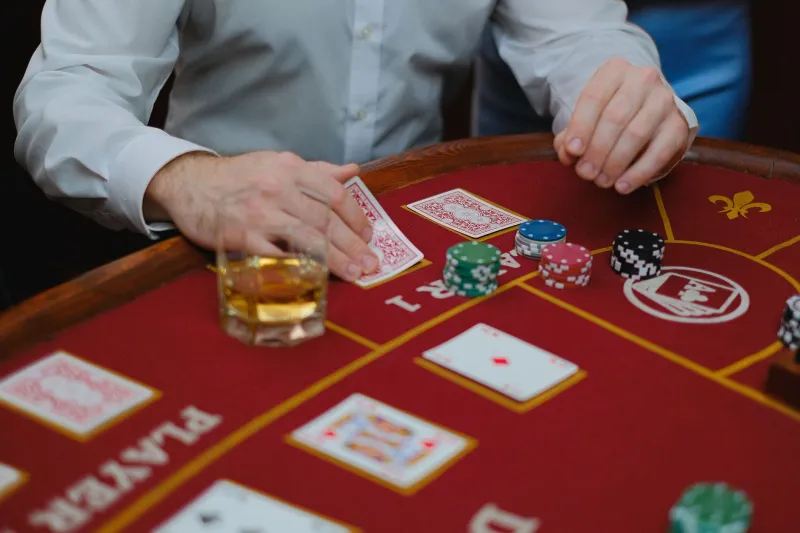
You sit down at a blackjack table in Vegas — maybe it's at one of the big Strip properties, maybe it's a smaller downtown joint — and within a few hands you can feel it. The dealer keeps busting. The cards are falling right. The guy two seats down just doubled down and pumped his fist for the third time in a row. Someone at the table mutters it out loud: "This table is hot."
And just like that, you're in. You bump your bet. You ride the wave. Because why wouldn't you? The table is hot.
Except it isn't. It never was. And the sooner you really internalize that fact, the more money you'll keep in your pocket over a lifetime of playing.
What the Gambler's Fallacy Actually Means (In Plain English)
The gambler's fallacy is the belief that past random events influence future ones. It sounds obvious when you say it that way, but in the middle of a live casino session with chips stacking up and adrenaline doing its thing, it stops feeling like a fallacy and starts feeling like pattern recognition.
Here's the cleanest way to think about it: each hand of blackjack is its own independent event. The shoe doesn't care what happened three hands ago. The dealer's next card doesn't "know" that she busted four times in a row. Every fresh deal starts from the same mathematical baseline — the house edge doesn't shrink because the last five hands went your way.
Flip a coin ten times and get heads every single time. What are the odds the eleventh flip lands heads? Exactly 50/50. The coin has no memory. Neither does the deck.
Why Our Brains Are Wired to See Streaks
This isn't about being dumb or gullible. Human brains are pattern-recognition machines — that's actually one of our greatest evolutionary strengths. We are built to find order in chaos, to connect dots, to assign cause and effect. In most areas of life, that skill keeps us safe and helps us make good decisions.
In a casino, it works against you.
When three winning hands happen back to back, your brain doesn't file that under "random variance." It files it under "meaningful pattern." Psychologists call this apophenia — the tendency to perceive connections between unrelated things. Casinos, whether they mean to or not, are perfectly designed environments for this kind of thinking. The sounds, the lights, the social energy of watching other people win — all of it amplifies the feeling that something real is happening.
And when you want something to be true, you're going to find evidence that it is.
The Cold Table Trap Is Just as Expensive
The hot table myth has a twin, and it's just as costly: the belief that a cold table is "due" to turn around. You've been losing for twenty minutes, so surely the tide is about to shift, right? You just need to stick it out a little longer. Maybe increase your bet to recoup the losses faster once the deck starts cooperating.
This is the gambler's fallacy running in the other direction — and it's arguably more dangerous because it keeps players at tables longer than they should be, chasing a turnaround that probability has no obligation to deliver.
A cold table isn't building up heat. It's just a table where you've been running below expectation, which is a completely normal part of short-run variance in any card game. Staying because you're "owed" a comeback is one of the most expensive decisions a player can make.
What Variance Actually Looks Like at a Blackjack Table
Here's something worth sitting with: even when you play perfect basic strategy — every split, every double down, every stand exactly right — you will still have losing sessions. You'll have stretches where the dealer draws 20 four hands in a row. You'll double down on 11 and pull a 2. You'll split aces and watch both of them get 2s.
That's not a cold table. That's normal variance. And it doesn't mean basic strategy failed you — it means you played the mathematically correct game and the short-run results didn't cooperate. Over thousands of hands, basic strategy closes the gap with the house as much as any unassisted player can. But no strategy, hot or cold, eliminates the randomness built into the game.
When players misread variance as momentum — in either direction — they start making decisions based on feelings instead of math. They increase bets when they're "on a roll." They chase losses when they're "due." Both moves chip away at the bankroll in ways that compound quietly over time.
So What Should You Actually Do?
The good news is that replacing streak-chasing with smarter thinking isn't complicated. It just takes a little discipline and a willingness to let go of the narrative your brain wants to write.
Stick to your bet sizing plan. Decide before you sit down what your base bet is and what your session bankroll is. Don't let a winning streak tempt you into betting three times your normal amount because the table "feels" good.
Accept variance for what it is. A few bad hands don't mean the table is cursed. A few good hands don't mean you've found a golden shoe. Both are just the normal distribution of outcomes doing its thing.
Use basic strategy every hand, regardless of recent results. The correct play on a hard 16 against a dealer's 10 doesn't change because you've won the last four hands. The math doesn't care about your streak.
Set a loss limit and respect it. If you're down to a pre-decided threshold, walk away. Not because the table is cold — but because protecting your bankroll is the single most important long-term habit a blackjack player can build.
The Real Edge Comes From Thinking Clearly
Blackjack rewards clear thinking more than almost any other casino game. The gap between a player who understands basic strategy and one who doesn't is measurable and significant. But even perfect strategy gets undermined when a player starts betting based on table temperature instead of math.
The hot table is a story you tell yourself. It's a comfortable explanation for a run of good luck, and there's nothing wrong with enjoying that feeling. Just don't let it write the check your next bet has to cash.
Every hand you play starts fresh. The deck doesn't owe you anything. And the player who understands that — really understands it, not just nods at it — is already ahead of most of the people sitting at that table with them.