You Haven't Earned a Win — The Table Doesn't Keep Score
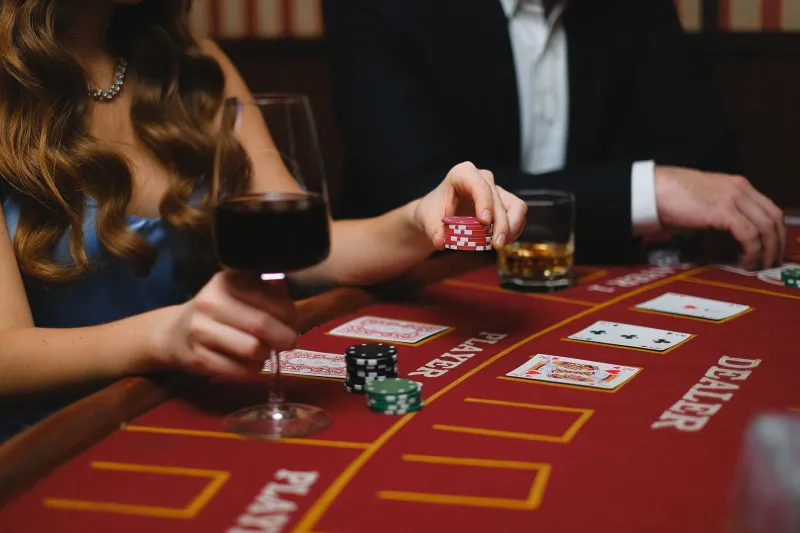
Picture this. You've been at the same table for two hours. You're down $180. You've played correctly — decent strategy, reasonable bets, no stupid splits you regret. You've just been running cold.
And then the thought creeps in: I've put in my time. I'm due.
It feels logical. It feels almost fair. You've been grinding, you've been patient, surely the math has to catch up eventually, right?
Wrong. And this specific flavor of wrong has a name: the sunk cost fallacy. It's one of the most well-documented cognitive traps in behavioral economics, and it plays out at blackjack tables across America every single night.
What the Sunk Cost Fallacy Actually Means
In plain terms, the sunk cost fallacy is the mistake of letting past investment — money spent, time logged, effort made — influence future decisions. Economists and psychologists have studied it for decades. It shows up in business, relationships, and yes, very prominently in gambling.
The logic goes: I've already lost $180, so I need to keep playing to get it back. Or: I've been here three hours, I can't leave now without winning something.
Both of those sentences feel reasonable on the surface. Neither of them holds up. The $180 is gone. The three hours are gone. They have no bearing whatsoever on what the next hand will do. The deck doesn't have a ledger. There's no cosmic accounting happening under that felt.
Why It Hits Harder at Blackjack Than Other Games
Blackjack is a game of skill layered on top of probability. That's part of what makes the sunk cost trap especially vicious here — because unlike a slot machine, you feel like your decisions matter. And they do, to a point. Basic strategy reduces the house edge significantly. Smart table selection matters. Bet sizing matters.
But none of that skill changes what already happened. And the dangerous fusion of skill and chance creates a specific illusion: the belief that if you just stay and play better, you'll reverse the damage. You'll make smarter calls. You'll catch the right cards.
Maybe. But the house edge doesn't pause while you dig out. And every hand you play to chase a loss is a hand played with compromised emotional judgment — which is exactly when strategy starts to slip.
Real Scenarios, Real Damage
Let's look at how this actually unfolds.
Scenario One: A player from Atlanta sits down at a $15 minimum table with $300. After 90 minutes, he's at $120. He's tired, he's frustrated, but he tells himself he can't leave down that much. He ups his bets to try to recover faster. An hour later, he's out entirely.
Scenario Two: A player in Vegas for a bachelorette weekend brings $250 to the table. She's down $100 by dinner. Her friends want to leave. She says she'll catch up in a few more hands — she's been sitting here too long to walk away now. She misses dinner and finishes the night down $220.
Neither of these players made irrational decisions in the classical sense. They were responding to real emotional pressure. But the pressure itself was built on a fiction: that time spent or money lost creates an entitlement to future wins.
It doesn't. It never has.
The Exit Trigger You Need Before You Sit Down
The most effective defense against the sunk cost trap isn't willpower in the moment — it's planning before the moment arrives. Specifically, you need a loss limit that you set with a clear head before a single chip hits the felt.
A loss limit is simple: a dollar amount at which you walk, no negotiation. Many experienced players set it at 50% of their session buy-in. Others use a fixed number. The exact figure matters less than the commitment to honor it.
When you hit your number, you leave. Not because the table is unlucky. Not because the cards are against you. But because you made a rational decision in advance, and that decision deserves more respect than the story your tired, frustrated brain is telling you at hour three.
Reframing What You've Actually Lost
Here's a useful mental reframe: the money you've lost at the table is already spent. Think of it the same way you'd think about money spent on dinner or a concert ticket. You paid for an experience. The experience happened. The money is gone.
Once you truly internalize that, the sunk cost math dissolves. You're no longer trying to recover something. You're making a fresh decision: do I want to spend more money on more blackjack right now? Sometimes the answer is yes — you've got budget left, you're enjoying yourself, the conditions are good. Sometimes the answer is no.
But either way, it's a forward decision, not a backward one.
What Leaving Actually Means
Walking away from a losing session isn't defeat. It's discipline. The players who last at this game — the ones who play month after month and still have a bankroll — are the ones who figured out that protecting what you have is a legitimate strategy.
The table doesn't know how long you've been sitting there. It doesn't owe you a comeback. Every hand is a clean slate, which means every hand is also a fresh opportunity to make a rational choice about whether you should still be playing.
Sometimes the smartest play you'll make all night is the one where you rack your chips and head for the exit.
At 21 Blackjack, we deal it straight: the best strategy in the building includes knowing when to walk.