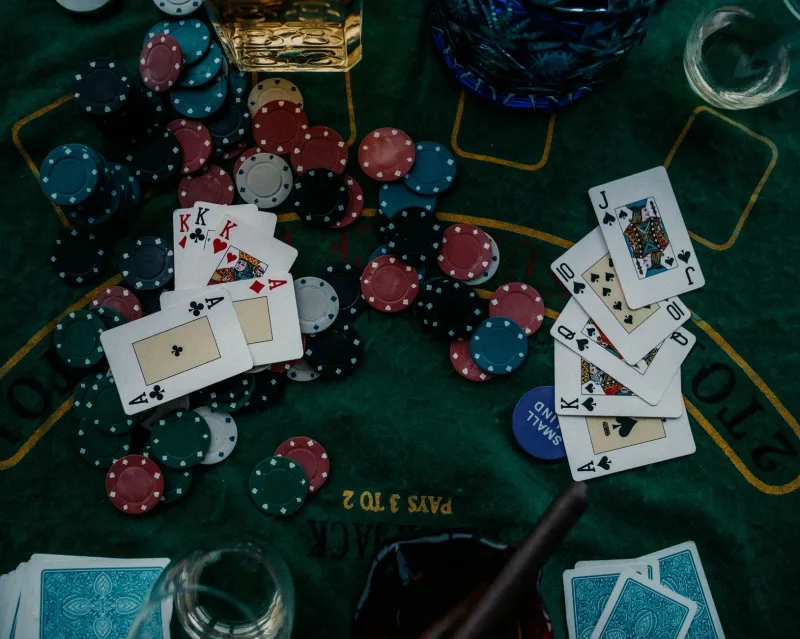
Fresh Off the Bus and Already at the Wrong Table: What Casinos Know About First-Time Blackjack Players
You walk into a casino for the first time. The lights are doing their thing. The sounds are everywhere — chips, shuffles, the distant chime of slots. You spot a blackjack table, it looks approachable, the minimum is posted on a little plastic sign, and you sit down.
Congratulations. You just made the most expensive decision of your night, and you haven't even touched a chip yet.
It's not about luck. It's about positioning. Casinos — especially the big ones along the Vegas Strip, in Atlantic City, and on the floors of tribal gaming operations across the Midwest — have spent decades studying how new players move, where they look, and what they're willing to tolerate. First-timers are profitable, and not just because they play badly. They're profitable because the house has already won before the first card drops.
The Floor Isn't Neutral — It's a Funnel
Walk into any major American casino and pay attention to where the blackjack tables are positioned relative to the main entrance. The tables closest to the doors — or closest to the high-traffic corridors between slots and the bar — almost always carry the worst rules for players.
We're talking 6:5 blackjack payout tables instead of 3:2. Continuous shuffle machines that eliminate any possibility of deck penetration awareness. Six-deck shoes with dealer hitting on soft 17. These rule combinations can push the house edge past 2% before you've made a single strategic error. That might not sound like much, but over a two-hour session at a $15 minimum table, it adds up fast.
Why are these tables up front? Because that's where first-timers sit. New players gravitate toward visible, accessible tables. They don't walk the full floor. They don't compare rules across tables. They see open seats and they take them. Casinos know this, and they stock those seats accordingly.
How Dealers Read the Room
Experienced dealers can identify a first-timer within about thirty seconds. It's not magic — it's pattern recognition built from thousands of hours on the felt.
Hesitation on basic decisions. Reaching for chips before the action is complete. Asking about side bets right away. Tipping awkwardly and too early. These are tells that signal a new player, and while dealers aren't adversaries (most are genuinely professional), the pace and style of the game will subtly shift.
At high-volume tourist tables, dealers move fast. Not because they're trying to cheat you — they're not — but because speed is profitable for the house. The more hands dealt per hour, the more opportunities for the house edge to grind. A new player who's uncertain slows things down, and some dealers will gently rush the action in ways that push you toward quick, unconsidered decisions.
The fix is simple: slow down. You are legally and socially entitled to take your time on every hand. Nobody at that table can make you act before you're ready.
The Side Bet Trap Is Set Before You Sit
First-time players are disproportionately targeted by side bet layouts because the visual design of those betting circles is genuinely appealing. Perfect Pairs. 21+3. Lucky Ladies. They're colorful, the payouts look huge on the felt graphics, and they feel like bonus opportunities rather than the high-margin traps they actually are.
The house edge on most blackjack side bets runs between 3% and 10%, depending on the specific bet and the casino. Compare that to the roughly 0.5% edge you'd face playing basic strategy on a solid 3:2 table. Side bets aren't a game within the game — they're a separate revenue stream dressed up to look like fun.
If a table has elaborate side bet graphics and a dealer who enthusiastically explains them to you before you've even posted your main bet, you are at a table designed for tourists. That's information worth having.
What a Good Table Actually Looks Like
Before you sit anywhere, spend five minutes walking the floor. You're looking for a few specific things:
Payout signage. Find the placard that says "Blackjack pays 3 to 2." If it says 6 to 5, keep walking. That single rule change is worth more than almost any strategic adjustment you could make at the table.
Dealer action on soft 17. The felt usually says "Dealer must hit soft 17" or "Dealer stands on all 17s." The latter is better for you. It's a small edge, but it's yours to keep.
Number of decks. Single-deck and double-deck games generally offer better odds than six-deck shoes, though casinos often offset this with worse rule sets. Pay attention to the whole picture, not just one variable.
Table location. The best player-friendly tables in most American casinos are deeper into the floor, away from the main corridors. They're not hidden — they're just not positioned for impulse seating.
The Confidence Trap
Here's the part that catches a lot of first-timers: you might actually win early. The first hour can go well. You make some decisions, a few land right, and you're up a little. That early win creates a false confidence that keeps you seated at a bad table longer than you should be.
Variance works in both directions. The house edge doesn't destroy you hand by hand — it works over volume. A 2% edge at a bad table feels invisible when you're running hot in the first thirty minutes. It becomes very visible by hour three.
The goal of your first visit isn't to win big. The goal is to not lose big, learn the environment, and come back with more information than you left with. That's a successful session even if your chip count says otherwise.
The Takeaway
Casinos aren't doing anything illegal. The rules are posted. The odds are documented. Nobody is forcing you to sit anywhere. But the floor is absolutely designed with a psychology in mind, and first-time players are the most predictable demographic on it.
Know where the good tables are before you walk in. Read the felt before you buy chips. Take your time on every decision. And if a table feels like it was put there specifically for someone who doesn't know any better — it probably was.
Deal smart. That starts before the first card hits the felt.