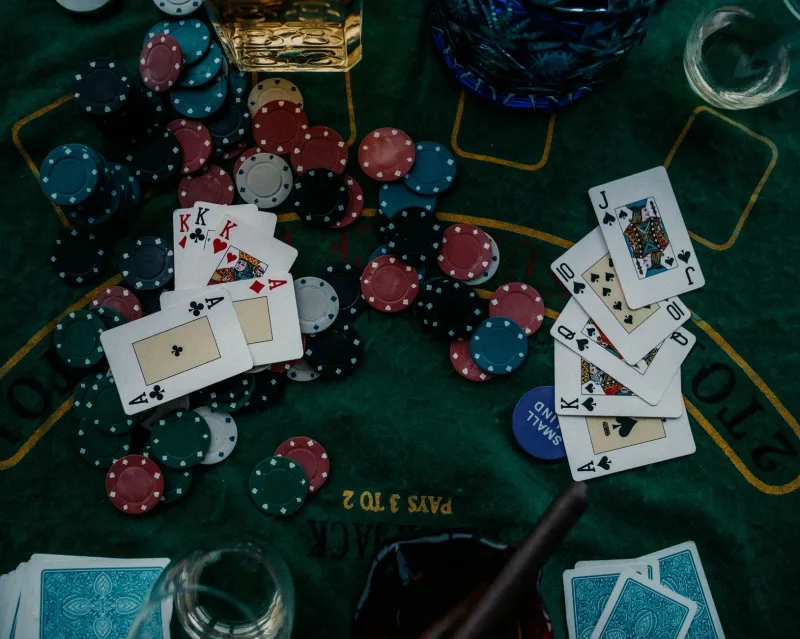
Forget Dealer Tells — The Casino Floor Has Real Patterns Worth Learning
Every year, a fresh wave of blackjack players walks onto casino floors convinced they can read the dealer. A slight hesitation before peeking at the hole card. The way a dealer's eyes move when the down card is strong. A subtle shift in posture when a natural is coming.
It's a compelling idea. It's also almost entirely fiction.
Professional dealers in American casinos are trained specifically to eliminate information leakage. The peek mechanics are standardized. The hand movements are rehearsed. The facial expressions are, after years on the felt, genuinely neutral. Hunting for tells in dealer behavior is a way to feel like you have an edge while systematically ignoring the real information the floor is giving you for free.
Because the floor absolutely does have patterns. They're just not where most players look.
Why the Shift Change Is Actually Important
Most American casino employees work structured shifts — typically eight hours, often with overlap periods at the start and end. Dealers rotate off individual tables roughly every thirty to forty-five minutes, cycling through the pit before their full break.
Here's why this matters: table conditions change with personnel. Not because of anything mystical, but because different dealers have different pacing. A fast dealer runs more hands per hour. More hands per hour means more exposure to the house edge, which means your bankroll erodes faster at a statistically identical rate per hand. A slower dealer — newer, more methodical, or simply working a different rhythm — gives you more time to think, fewer hands per hour, and mathematically lower expected loss over the same clock time.
This isn't a dealer tell. It's a dealer pace observation. You can see it within the first five minutes of sitting down. If the dealer is burning through hands at a speed that makes you feel rushed, that's relevant information about your expected loss rate per session, not just per hand.
The Pit Boss Attention Pattern
Floor supervisors — the people standing at the edge of the pit watching tables — don't distribute their attention randomly. They follow patterns based on bet sizing, player behavior flags, and their own shift priorities.
At a $10-$25 table with recreational players making consistent small bets, floor supervisor attention is minimal. That's not a problem for most players — it just means the table is operating on autopilot. But when bet sizes start varying significantly, when a player starts winning consistently, or when a player's behavior triggers a mental flag (frequent hesitation, chips being moved in unusual patterns, asking unusual questions), that attention increases.
For the average recreational player, this is background information. For a player who's been experimenting with any form of card counting — even rudimentary hi-lo — understanding when and why supervisor attention increases is genuinely useful. The moment you start getting watched more closely is not the moment to push your bet sizing.
You don't need to be paranoid about it. Just aware.
Table Rotation Speed as a Quality Signal
In well-run American casinos, the tables that stay consistently busy throughout a session are usually the ones with the most favorable conditions for the house. That might sound counterintuitive — shouldn't good tables attract players? — but it's actually a byproduct of casino economics.
High-volume tables make money efficiently. The casino keeps them running at accessible minimums because the throughput of players compensates for the lower per-bet margin. Tables with worse player conditions — 6:5 payouts, continuous shufflers, higher minimums — often have lower sustained traffic because players burn through their bankrolls faster and leave.
If you walk past a table that's consistently full with players who are staying for extended periods, that's at least a soft signal worth investigating. Check the rules on the felt. Compare them to the emptier tables nearby. You may find that the "popular" table is popular for the right reasons.
Payout Frequency and the Variance Tell
This one is subtle, but it's real. When you observe a table for a few minutes before sitting down, you're watching a live sample of outcomes. A table where players are winning hands at a notably higher rate than expected isn't running "hot" in any meaningful sense — it's just in a positive variance window. But it does tell you something about the shoe's current composition if it's a hand-shuffled game.
In a continuous shuffle machine game, this observation is worthless — every hand is essentially a fresh deck. In a multi-deck shoe game, a table that's been running player-favorable for the last twenty minutes has a shoe that's been dealing player-favorable cards. That composition changes as the shoe progresses.
This is the closest most non-counting recreational players will ever get to a legitimate table-selection edge, and it requires nothing more than watching for a few minutes before sitting down. You're not counting. You're just timing your entry.
Surveillance Priority Zones
American casinos allocate surveillance resources based on risk. High-limit rooms get disproportionate attention. Tables near the cage get more camera coverage. The $10 tables in the middle of the main floor during a busy Saturday night are, relative to everything else happening, lower priority.
This doesn't mean rules are looser at those tables or that you can get away with anything. It means the casino's attention is concentrated elsewhere, and the operational intensity at your table reflects that. Dealers may be slightly more relaxed. Pit supervisors may be stretched thinner. The general environment is less formal.
For a new player learning the game, this is actually a comfort. A lower-pressure table environment gives you more space to think, ask questions without feeling watched, and make your inevitable early-learning mistakes without it becoming a production.
The Pattern You Can Actually Use
Here's what all of this adds up to: before you sit down at any blackjack table in any American casino, spend five minutes watching the floor as a system rather than looking for magic signals from individual dealers.
Where is supervisor attention concentrated right now? Which tables have sustained player populations versus high turnover? What's the pace of the dealer you're about to play against? What do the rules on the felt actually say?
None of this is a guaranteed edge. Blackjack is a negative-expectation game and the house edge doesn't disappear because you chose your table thoughtfully. But the difference between a player who sits down impulsively and one who spends five minutes reading the floor before committing is real, measurable, and entirely available to anyone willing to pay attention.
The floor is talking. Most players are too busy looking for tells to hear it.