Chips Don't Feel Like Money — Until They Do
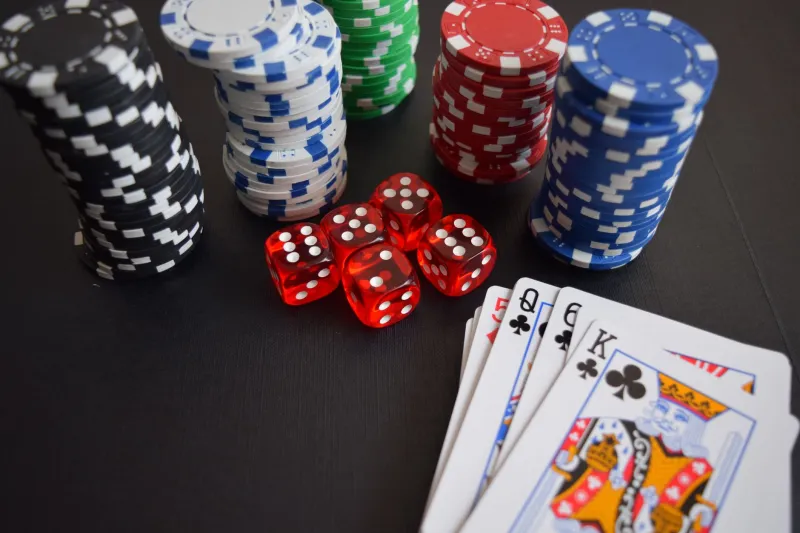
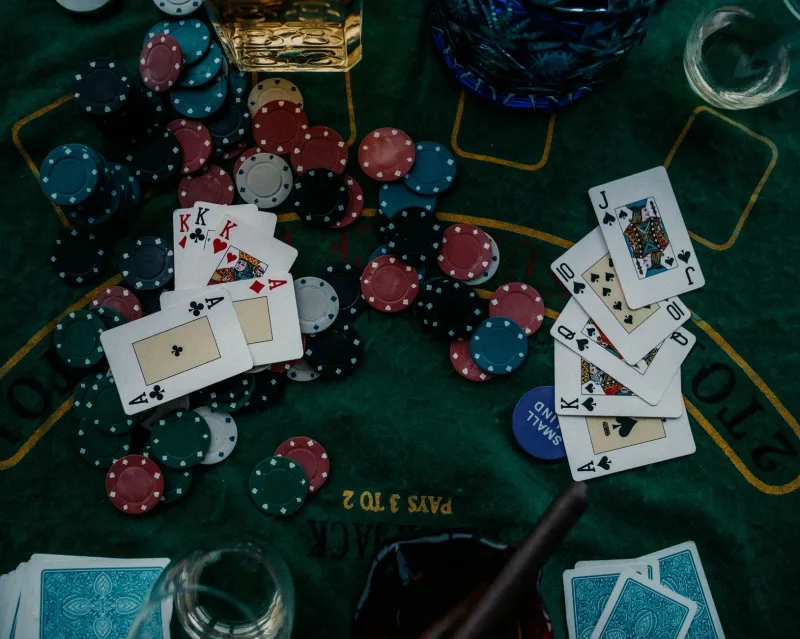
Something shifts the moment a dealer pushes a stack of chips across the felt toward you. Those red and green discs don't feel like the $200 you handed over at the cage. They feel like playing pieces. Game tokens. Points in a system that exists only inside the casino walls.
That feeling is not an accident.
Casinos have known for decades that abstracting money into chips reduces the psychological friction of spending it. You're not betting forty dollars — you're pushing two green chips forward. The transaction feels smaller, faster, less consequential. And that gap between what chips feel like and what they actually represent is one of the most reliable mechanisms the house has working in its favor, completely separate from any mathematical edge.
The Casino Money Illusion
Psychologists have a name for this: the "house money effect." Once money has been converted into winnings or chips, people treat it differently than they'd treat cash they earned from a paycheck. Winnings feel like found money. Chips feel like game currency. Neither framing is accurate, but both are incredibly sticky once they take hold.
Watch how people bet after a winning hand. The stack just got bigger, so the next bet gets bigger too. It's not a calculated decision — it's a feeling. "I'm playing with house money now, so it doesn't really count." Except it does count. Every chip on that felt was either money you brought in or money you won, and winning money is still your money.
The flip side is equally dangerous. When players are losing, the chips start to feel less real in a different way — like they're already gone, so there's no point being careful. The decision to push everything forward on a desperate double-down doesn't feel like the financial decision it actually is. It feels like a Hail Mary in a game.
Both distortions point in the same direction: toward worse decisions.
What Your "Gambling Budget" Is Actually Hiding
A lot of American players set aside a specific amount before a casino trip and call it their "gambling budget" or "entertainment money." This is genuinely good practice — ring-fencing money you can afford to lose is the right instinct. But the framing can quietly become a permission slip for recklessness.
"I budgeted $300 for this trip" sometimes means "I did the responsible thing, so now I can be irresponsible with this specific $300." The budget becomes a psychological license rather than a genuine limit.
Here's a useful test: if you lost that $300 in the first 20 minutes, would you go back to the ATM? If the honest answer is yes — even sometimes, even under the right circumstances — then the $300 wasn't really your limit. It was your opening position in a negotiation you were always going to lose.
Real loss limits don't bend. They don't have exceptions for "I was so close to breaking even" or "the table was just starting to turn." The moment a limit becomes negotiable, it stops being a limit.
The Gap Between Emotional Bankroll and Real Bankroll
Your emotional bankroll is the number you feel okay about losing. It's influenced by how your night has gone, whether you're up or down, how many drinks you've had, whether the person next to you just won big, and a hundred other factors that have nothing to do with your actual financial situation.
Your real bankroll is the number you can genuinely afford to lose without it affecting anything that matters — rent, bills, savings, relationships, sleep.
For some people, those two numbers are close together. For a lot of people, they're not, and the gap widens as the session goes on. Early in the night, when you're fresh and your buy-in is intact, the emotional and real bankrolls might feel aligned. Three hours in, down $150 and chasing, the emotional bankroll has quietly expanded while the real one stayed exactly where it was.
This is the borrowed confidence the title is about. You're making decisions with a risk tolerance that doesn't actually belong to you — borrowed from a version of yourself that doesn't have to deal with the consequences tomorrow morning.
Practical Ways to Shrink the Gap
The goal isn't to make gambling joyless. It's to make the decisions you're making at the table actually reflect your real situation rather than your in-the-moment emotional state. A few approaches that genuinely help:
Leave your ATM card in the room. Physically separating yourself from additional funds is the simplest circuit breaker available. If getting more money requires leaving the casino floor, going back to your room, and making a deliberate trip, most people won't do it. Friction is your friend here.
Convert chips back to cash in your head before every significant bet. Before you push $100 forward, say the number out loud in your head: one hundred dollars. Not two green chips. One hundred dollars. This sounds simple because it is — and it works because the whole chip system is designed to prevent exactly this mental translation.
Set your loss limit before you sit down, not after. Limits set mid-session are almost always higher than limits set in advance. Pre-commitment is a well-documented tool in behavioral economics for exactly this reason. Your future self, three drinks in and down $200, is not a reliable decision-maker. Your current self is.
Treat winnings as real money immediately. If you're up $100, mentally subtract it from your remaining budget and protect it. Don't let it become "house money" that gets recycled into bigger bets. You earned it — it's yours.
The Real Game Underneath the Game
Blackjack is a game of decisions. The cards are random, the math is fixed, and the only variable you actually control is how you play each hand and how you manage your money across a session. The psychological layer — the way chips feel, the way winning changes your risk appetite, the way losing distorts your judgment — is where most of the real variance comes from for recreational players.
The house edge is 0.5% with good basic strategy. The "emotional edge" the casino holds over players who aren't thinking clearly about what their chips represent is worth far more than that.
Play the cards smart. But also play the psychology smart. The felt doesn't know the difference between your entertainment budget and your grocery money — but you do, and that awareness is worth more than any strategy chart.