Read the Table Before You Bet a Dime: The Casino Rule Differences That Are Costing American Players Real Money
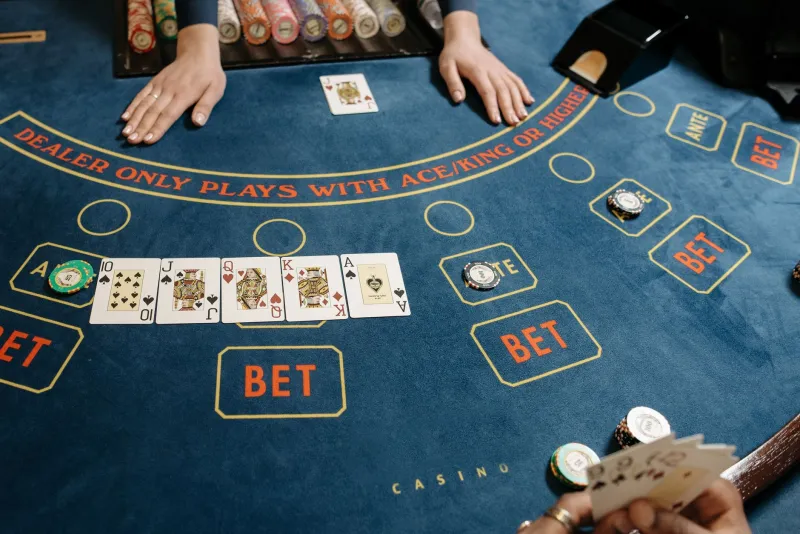
Most casino players walk up to a blackjack table, glance at the minimum bet, and sit down. That's it. That's the whole evaluation process. And casinos — both land-based and online — are counting on exactly that level of attention.
Because buried in those table rules, sometimes printed right on the felt and sometimes hidden in a platform's terms page, are variations that can double or even triple the house's mathematical advantage. The game looks the same. The cards feel the same. But you're playing a fundamentally different game depending on which table you choose.
Knowing how to read those differences before you place a single chip is one of the most underrated skills in blackjack — and it costs you absolutely nothing to develop it.
The Biggest Ripoff in Modern Blackjack: 6:5 Payouts
Let's start with the one that should make every informed player turn around and walk away without looking back.
For most of blackjack's history, a natural — an ace and a ten-value card — paid 3:2. On a $20 bet, that's $30 back. Somewhere along the way, casinos started quietly introducing 6:5 payout tables, particularly on single-deck games marketed as premium or exclusive experiences. On a $20 bet at 6:5, that same natural pays $24.
That six-dollar difference is not a rounding error. It shifts the house edge by approximately 1.39 percentage points. To put that in concrete terms: a standard six-deck game with good rules might carry a house edge around 0.5%. Add a 6:5 payout structure and you're suddenly playing against a 1.9% edge or worse. The casino has nearly quadrupled its mathematical advantage with one rule change that most players don't notice until they're already losing.
Single-deck games with 6:5 payouts are especially common on the Las Vegas Strip and at online platforms targeting casual players. The single-deck framing sounds favorable — and it would be, at 3:2. At 6:5, it's worse than a standard multi-deck shoe game with proper rules. Don't be fooled by the deck count.
The rule: Only sit at tables that pay 3:2 on blackjack. It should be printed clearly on the felt. If it isn't, ask the dealer before you buy in.
Soft 17: The Dealer Rule That Quietly Shifts the Edge
Here's one that's easy to miss because it sounds like a minor procedural detail. In some games, the dealer must stand on all 17s — hard and soft. In others, the dealer hits on soft 17 (an ace plus a 6, for example).
Hitting on soft 17 gives the dealer a better chance of improving a hand that could otherwise be beaten. Over millions of hands, this rule increases the house edge by roughly 0.2%. That might sound small, but stacked on top of other unfavorable rules, it adds up to real money over a session.
The table felt or the casino's posted rules will usually indicate "Dealer Stands on All 17s" (favorable) or "Dealer Hits Soft 17" (unfavorable). On online platforms, this should be listed in the game's information panel. If it's not clearly stated, dig until you find it — or choose a different game.
The rule: Seek out tables where the dealer stands on soft 17. It's a small edge, but every fraction of a percent you recover matters.
Doubling Restrictions: When You Can't Double Down on Your Best Hands
Doubling down — placing an additional bet equal to your original wager in exchange for exactly one more card — is one of the most powerful tools a blackjack player has. Basic strategy relies on it heavily, particularly on totals of 9, 10, and 11 against weak dealer upcards.
Some tables restrict doubling to specific hand totals. "Double on 10 and 11 only" is a common restriction you'll encounter, particularly at older Vegas properties and some online platforms. This limitation cuts off profitable doubling opportunities on 9 and on soft hands like soft 13 through soft 18, and it costs the player approximately 0.09% to 0.25% depending on the specific restriction.
Full doubling freedom — the ability to double down on any two cards — is the standard you should be looking for. If a table restricts your doubling options, that's a rule working against you.
Splitting Rules: Pairs, Re-splits, and Aces
Not all casinos handle pair splitting the same way. The differences might seem subtle, but they affect your ability to execute basic strategy correctly.
The key things to check:
Re-splitting pairs: Can you split again if you draw another matching card? Most favorable tables allow re-splitting up to three or four hands. Tables that only allow one split per pair reduce your flexibility and edge.
Splitting aces: Many casinos allow you to split aces but restrict you to a single card on each resulting hand — no further hitting. This is standard and not a major concern. However, some tables don't allow ace splitting at all, which is a meaningful disadvantage.
Drawing after splitting aces: A handful of games allow you to play split aces as normal hands. This is rare and favorable. If you find it, note it.
Each restriction chips away at the player's ability to play optimally. Individually, they're small. Combined with a 6:5 payout and a dealer hitting soft 17, you're looking at a game that's been quietly engineered to extract money at a much faster rate than the setup implies.
Surrender: The Underused Rule That Can Save You Money
Late surrender — the option to fold your hand and recover half your bet before the dealer checks for blackjack — is available at some US casinos and online platforms, and it's consistently undervalued by casual players.
Basic strategy uses surrender in specific, narrow situations: a hard 16 against a dealer 9, 10, or ace, and a hard 15 against a dealer 10, for example. In those spots, surrendering is mathematically better than playing out the hand. When the rule is available, it reduces the house edge by approximately 0.07%.
It's not a dramatic rule, but it's a free tool when the table offers it. Check for it. Use it correctly.
How to Evaluate Any Table in Under Two Minutes
Before you sit down — at a casino floor or on an online platform — run through this quick checklist:
- Blackjack pays 3:2? If it's 6:5, walk away immediately.
- Dealer stands on all 17s? Favorable. Hits soft 17? Slight disadvantage.
- Double down on any two cards? Favorable. Restricted to 10 and 11 only? Disadvantage.
- Re-splitting allowed? Favorable. Single split only? Minor disadvantage.
- Surrender available? Favorable. Not offered? Neutral — just don't factor it into your strategy.
A table that passes all five checks is genuinely a good game. A table that fails on the first rule alone is one you should never play, regardless of how good everything else looks.
The casino doesn't advertise these differences. They don't highlight the house edge on the felt alongside the minimum bet. That information is yours to find — and now you know exactly where to look.