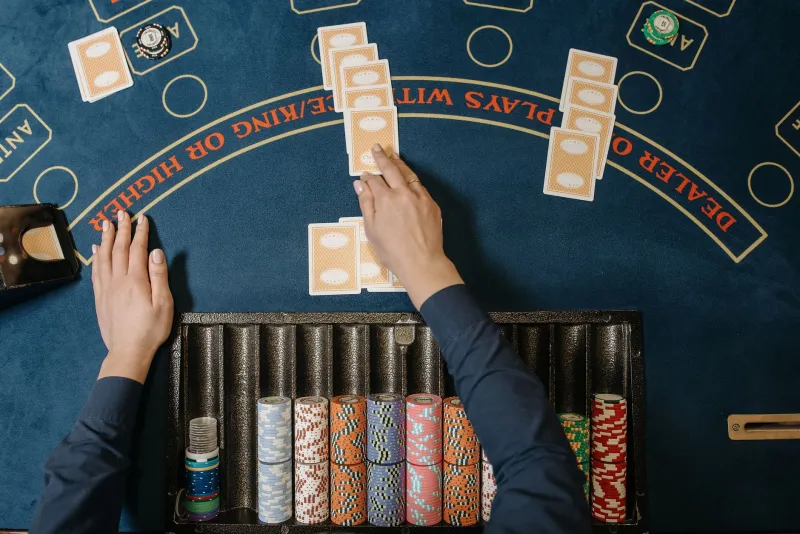
Hard 16: The Hand That Breaks Hearts, Bankrolls, and Bad Habits All at Once
Every blackjack player has a nemesis. For most people sitting at an American casino table — whether it's a $10 felt in Tunica or a $25 spot on the Vegas Strip — that nemesis has a name: hard 16.
It's not the flashiest hand. It doesn't come with the gut-punch drama of busting on a double down or the quiet satisfaction of a natural blackjack. But hard 16 is everywhere, it's relentless, and if you're handling it on instinct rather than strategy, it's almost certainly one of the biggest leaks in your game. Let's fix that.
Why Hard 16 Shows Up So Often
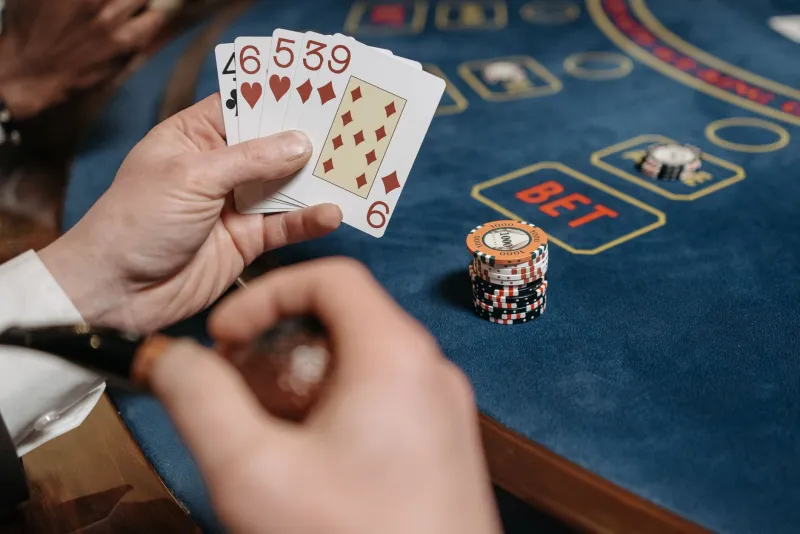
Blackjack is a game of probabilities, and the deck doesn't care about your feelings. Hard 16 is the most frequently occurring difficult hand in the game for a simple reason: there are dozens of card combinations that produce it. A 10 and a 6. A 9 and a 7. An 8 and an 8 (though that one has its own rules — more on that shortly). A 5, 5, and 6. The combinations stack up fast, which means you're going to face this decision regularly, session after session.
And here's the brutal part: hard 16 is statistically one of the worst hands you can hold. You're too high to feel safe hitting, but not high enough to feel safe standing. You're stuck in no man's land, and the discomfort of that position is exactly what causes players to make emotional decisions instead of correct ones.
The Math Nobody Wants to Hear
Let's be direct. When you hold a hard 16, you're already in a losing position more often than not. The question isn't how to win with 16 — it's how to lose less. That reframe matters more than most players realize.
If you hit a hard 16, you'll bust roughly 62% of the time. That's a gut-wrenching number. But standing doesn't magically make things better. The correct play depends almost entirely on what the dealer is showing, and this is where discipline separates the serious players from the ones bleeding chips on emotion.
What to Do Against Every Dealer Upcard
Here's the breakdown, based on standard basic strategy for the multi-deck games you'll find at most American casinos:
Dealer shows 2 through 6 (the weak upcards): Stand. The dealer is in bust territory, and your job is to stay alive and let them self-destruct. Yes, 16 feels terrible to stand on. Do it anyway.
Dealer shows 7 through Ace (the strong upcards): Hit. This is where most players freeze up and make the wrong call. Standing against a dealer 7, 8, 9, 10, or Ace with a hard 16 is one of the costliest mistakes in the game. The dealer is likely to make a strong hand, and your only shot is to improve yours. The bust risk of hitting is real, but it's the lesser of two evils.
Special case — 8-8: Always split. This is non-negotiable. Splitting eights against any dealer upcard, including a 10 or Ace, is the correct play. You're turning one terrible hand into two hands with a fighting chance. It stings to put more money out against a dealer 10, but the math supports it every single time.
The Surrender Option (And Why You Should Know If It's Available)
Here's something worth checking before you sit down at any table: does the house offer late surrender? If it does, hard 16 against a dealer 9, 10, or Ace is a textbook surrender situation. You give up half your bet and walk away from a hand where the odds are stacked heavily against you.
Surrender gets a bad rap because it feels like quitting. It's not. It's one of the sharpest tools in a disciplined player's kit. If the table offers it and you're not using it on hard 16 against those strong dealer upcards, you're leaving value on the felt.
The Psychology Problem
Here's why hard 16 destroys bankrolls even when players know the right move: fear makes people stand when they should hit.
You're sitting there with 16, the dealer is showing a 9, and your brain is screaming that if you hit and bust, it's your fault. If you stand and the dealer makes 20, well — at least you didn't blow it yourself. That's not strategy. That's self-protection dressed up as decision-making.
The bust feels more personal than the dealer beating you. It's visible, immediate, and it stings. But from a pure expected-value standpoint, hitting that 16 against a dealer 9 is the correct call, even knowing the bust probability. The alternative — standing — loses more money over time. Every time you let fear override the math, you're paying a tax that compounds across hundreds of hands.
What Mastering This One Hand Actually Does for Your Game
Blackjack's house edge in a standard six-deck American game sits around 0.5% when played with correct basic strategy. A meaningful chunk of the gap between that number and what most recreational players actually experience comes from misplaying hard 16. It's that common and that consequential.
If you commit the correct plays on hard 16 to memory — stand against 2 through 6, hit against 7 through Ace, split those 8s, and surrender when the option is available — you're closing one of the biggest leaks in the average player's game. You won't win every hand. You'll still bust. You'll still watch dealers pull miracle cards. But you'll be making the highest-percentage decision available to you, and over a full session or a full year of play, that adds up.
Reframe the Hand, Change Your Results
Hard 16 isn't a curse. It's a test. Every time it shows up, the table is essentially asking whether you're playing with your gut or your head. Emotional players treat it like a coin flip and make whatever feels safer in the moment. Disciplined players recognize it as a solvable problem with a defined correct answer.
The hand is going to keep coming. The deck guarantees it. The only variable is how you respond — and that's entirely up to you.
Next time you're dealt a 10-6 and the dealer is showing an 8, don't freeze. Don't stand because it feels safer. Signal for another card, accept the outcome, and know that you made the right call. That's what playing smart looks like, even when the result doesn't go your way.