You're Loyal to a Casino That Isn't Loyal Back: Breaking the Habit That's Quietly Costing You
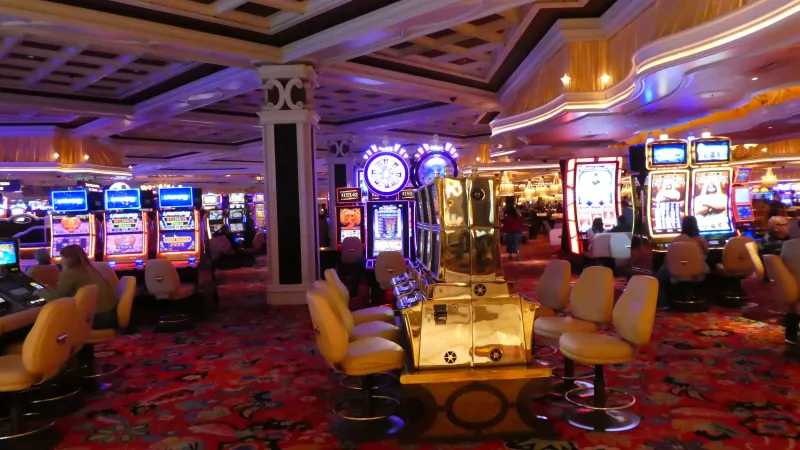
There's a casino somewhere in your city, your state, or maybe just off the highway you've driven a hundred times, where you feel at home. You know which entrance to use. You know the cocktail server's name. You know where the good blackjack tables are — or at least, where they used to be.
That familiarity is worth something. It's also costing you money.
The psychology behind why players stick with suboptimal casinos and worse-than-average table rules is well-documented, and it has a name: commitment bias. Once you've invested time, money, and emotional energy in a place, walking away feels like a loss — even when staying is the objectively worse financial decision. This isn't a character flaw. It's just how human brains work. But in a game like blackjack, where the margins are already thin, letting your brain's comfort instinct override your strategic instinct is a quiet, steady drain on your bankroll.
What You're Actually Paying for Familiarity
Let's get concrete. Say your go-to casino runs 6:5 blackjack payouts on its main floor — a rule that alone adds roughly 1.4% to the house edge compared to the standard 3:2 game. Maybe the tables also hit on soft 17, which tacks on another 0.2%. You've been playing here for two years. You're comfortable. You know the dealers.
Meanwhile, thirty minutes up the road, there's a casino running 3:2 games with dealers who stand on soft 17 and a lower table minimum. You've never been. It feels like a hassle.
That 1.6% edge difference doesn't sound like much until you do the math. At a $25 table playing 60 hands an hour, you're wagering $1,500 per hour. That 1.6% gap costs you an extra $24 per hour before you factor in any strategy deviations. Over a four-hour session, that's nearly $100 you paid for the privilege of sitting somewhere familiar.
The casino didn't charge you a loyalty tax. You charged yourself one.
The Rules Nobody Reads Until It's Too Late
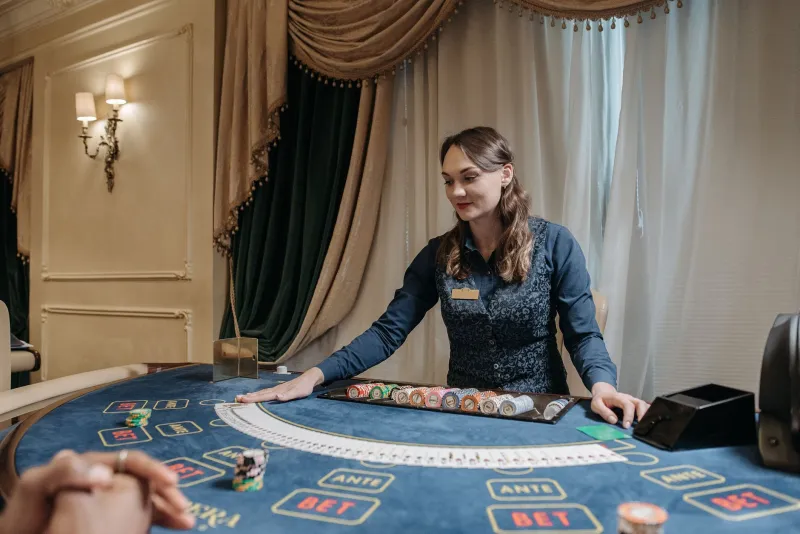
Here's the thing about blackjack table rules: they're posted right there on the felt. The problem is most players stop reading them once they've found a spot they like. They checked the rules once, maybe the first time they sat down, and then filed that information away as permanent. Tables change. Casinos quietly update their conditions — sometimes seasonally, sometimes after management changes, sometimes just because they can.
A table that offered solid rules six months ago might have quietly shifted to a continuous shuffling machine, tightened the doubling restrictions, or added a side bet push that changes the effective payout structure. These adjustments often happen without announcement. If you're on autopilot, you won't notice until your bankroll tells you something feels off.
Make it a habit — every single session, before you buy in — to actually read the placard. Check the payout. Check the dealer's soft 17 rule. Check how many decks are in play. Thirty seconds of attention can tell you whether the table you're about to sit at is the same table it was last month.
The Sunk Cost on the Felt
Another version of this trap plays out mid-session. You've been at a table for two hours. You're down. The table has been cold, the rules aren't great, and you've watched three other players leave in frustration. But you've been here two hours. You've invested in this table.
That's sunk cost thinking, and it's the same logic that keeps people in bad jobs and bad relationships. The money you've already lost is gone regardless of whether you stay or leave. The only question that matters is: what are the conditions going forward? If the conditions at this table are worse than what you'd find elsewhere on the floor — or in a different casino entirely — then staying is a choice to keep paying a premium for nothing.
Leaving a table, a section, or an entire casino mid-session is not failure. It's a strategic adjustment. The best players treat every new session, and honestly every new shoe, as a fresh evaluation.
A Simple Framework for Deciding When to Walk
You don't need a spreadsheet. You need three honest questions:
1. Are the rules at this table competitive? 3:2 payout, dealer stands on soft 17, standard doubling and splitting options. If any of those are off, you're already fighting uphill. Is there a better option on this floor or nearby?
2. Am I staying because the conditions are good, or because I'm already here? If the honest answer is the second one, that's the bias talking, not your strategy.
3. What would I tell a friend to do in this exact situation? This one cuts through the emotional noise faster than almost anything else. You'd tell your friend to get up and find a better table. Take your own advice.
Loyalty Points Don't Pay for Bad Rules
The comps, the rewards card, the free parking — none of it offsets the edge you're surrendering at a table with inferior rules. Casino loyalty programs are designed to make you feel like you're getting something back, and you are, in a narrow sense. But the math almost never works out in your favor when you factor in what you're giving up at the table to earn those rewards.
Your loyalty should go to good conditions, not to a building. The best players in any American casino aren't the ones with the gold-tier rewards cards. They're the ones who walked in, found the best table on the floor, sat down, played smart, and left when the conditions stopped making sense — regardless of whether they'd been there for twenty minutes or twenty years.
Deal smart. That starts before you ever touch a chip.