The Almost-Win Is the Most Expensive Hand You'll Ever Lose
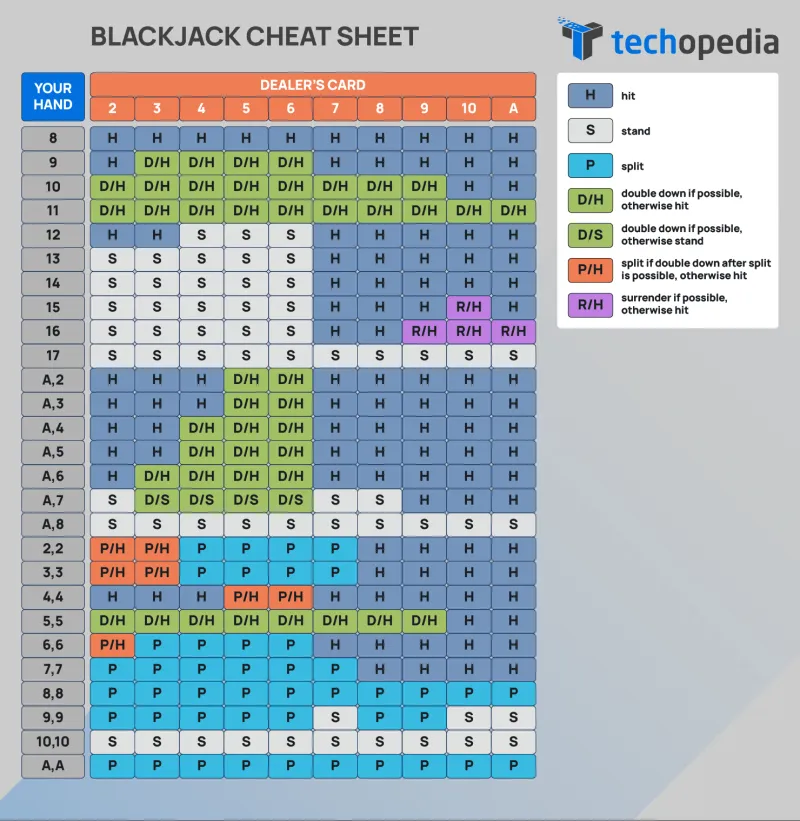
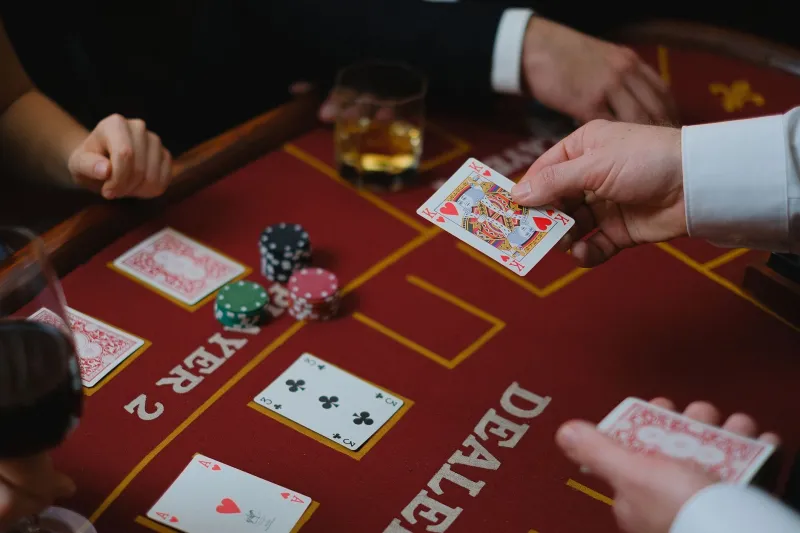
Photo: blackjack cards close call 20 versus 21 casino table dramatic, via www.techopedia.com
You're sitting at 20. The dealer flips a 6 underneath their showing 5. They draw a 7. Twenty-three. Bust. You win.
Now flip it: you're sitting at 20. The dealer flips a 6 underneath their 5. They draw a 6. Twenty-two. Still bust. You still win.
Both outcomes are identical to your chip stack. But ask any player and they'll tell you the first scenario felt different — more dramatic, more earned, closer to the edge. That feeling is a lie your brain tells you, and it's one of the most expensive lies in casino gaming.
The Near-Miss Is a Casino Feature, Not a Bug
Game designers in the slot machine world have known for decades that near-misses — two jackpot symbols and one off — keep players feeding machines longer than outright losses do. The same psychological mechanic operates at the blackjack table, just without the engineered graphics.
When you lose a hand by a single pip — your 19 against the dealer's 20, your 17 against their 18 — your brain registers something different than a clean loss. The reasoning centers light up. I was so close. I almost had it. The next one has to go my way.
This is the gambler's fallacy in its most emotionally potent form. And what makes it particularly dangerous at blackjack is that the near-miss experience is entirely real — the outcomes genuinely are close — even though the mathematical implications are completely nonexistent.
The Numbers Behind the Feeling
Let's put some math to this.
In a standard six-deck blackjack game with basic strategy, the house edge runs roughly 0.5%. That means for every $100 wagered, you expect to lose about fifty cents on average over a long enough sample. That's the baseline.
Now consider what happens when a player responds to near-misses by increasing bet size. This is called "tilt betting" in poker, but it happens constantly at blackjack tables under different names — "pressing," "chasing," "going for it." The mechanism is the same: emotional response to a painful near-loss drives a larger wager on the next hand.
If you're playing $25 hands and bump to $50 after a close loss, you've doubled your exposure. The house edge doesn't change — it's still 0.5% — but the absolute dollar amount at risk has doubled. Over a session of 80 hands, the difference between consistent $25 bets and reactive bet increases after near-misses can easily translate to $40 to $80 in additional expected losses, purely from the variance in bet sizing.
That's not a small number. That's a dinner, a tank of gas, or the stake for your next session.
Why "Almost" Doesn't Exist in the Math
Here's the core concept that breaks the near-miss illusion: cards have no memory.
A dealer who busted on a 22 on the last hand is no more or less likely to bust on the next one. Your 19 that lost to a dealer's 20 doesn't create any kind of cosmic debt owed to you on the following deal. The deck — whether physical or virtual — resets to the same probability distribution after every hand.
The near-miss feels like it carries information about upcoming hands. It doesn't. It carries only emotional weight, and emotional weight is the single most reliable predictor of bad betting decisions.
Consider this framing: a player who loses $25 on a hand where they had 19 and the dealer showed 20 lost exactly $25. A player who loses $25 on a hand where they had 5 and the dealer showed 21 also lost exactly $25. The chip tray does not care about the drama of the hand. The tray counts dollars.
The Compounding Cost of Extended Sessions
Near-misses don't just trigger bigger bets — they trigger longer sessions. This is the second, often overlooked cost.
Players who experience a cluster of close losses tend to stay at the table longer than their original plan dictated. The reasoning is intuitive but flawed: I keep almost winning, so the wins must be coming soon. The result is more hands played, more exposure to the house edge, and more opportunities for variance to eat into the bankroll.
Let's quantify it. Say your original plan was a 90-minute session at a $25 table averaging 70 hands per hour. That's 105 hands, with $2,625 in total action. At a 0.5% house edge, your expected loss is around $13.
Now say near-misses keep you at the table an extra hour. That's another 70 hands, another $1,750 in action, and another $8.75 in expected loss. Extend by two hours and you're looking at nearly $35 in expected loss — nearly three times your original plan — not because the house edge changed, but because emotional responses to close calls extended your exposure.
Time at the table is money at risk. Every near-miss that keeps you seated is costing you in expected value, even when it doesn't feel that way.
Rewiring the Response
The good news is that understanding the mechanism goes a long way toward defusing it. Here's a practical framework:
Name the feeling, then dismiss it. When you lose a close hand, consciously acknowledge: That felt like a near-miss. It has no predictive value. My next hand starts at the same baseline odds as always. This sounds overly deliberate, but it works.
Set a session budget and a hand count, not just a time limit. Knowing you're playing 100 hands and then walking regardless of outcome removes the emotional variable of "just a few more hands" from the equation.
Bet flat. Consistent bet sizing across a session is the single most effective mechanical protection against tilt betting. If your unit is $25, every bet is $25 until you intentionally adjust your session stakes — not reactively, but as a planned decision.
Track outcomes without drama. A win is a +1. A loss is a -1. A near-miss loss is still a -1. If you're writing results down (which is a genuinely useful practice), there's no column for "almost won that one." Forcing yourself to record outcomes in neutral terms strips the emotional charge from close calls.
The Real Cost Isn't the Hand — It's the Response
The mathematics of blackjack are not particularly forgiving, but they're also not mysterious. The house edge is known. Basic strategy is documented. The expected value of any given hand can be calculated.
What can't be pre-calculated is how you'll respond when the dealer pulls a 5 to make 21 on a hand you should have won. That response — the decision you make on the very next hand — is where sessions are actually won and lost.
The almost-win isn't a sign. It isn't a message. It's just a hand that didn't go your way by a margin that happens to feel significant.
Your bankroll doesn't feel anything. Play accordingly.